

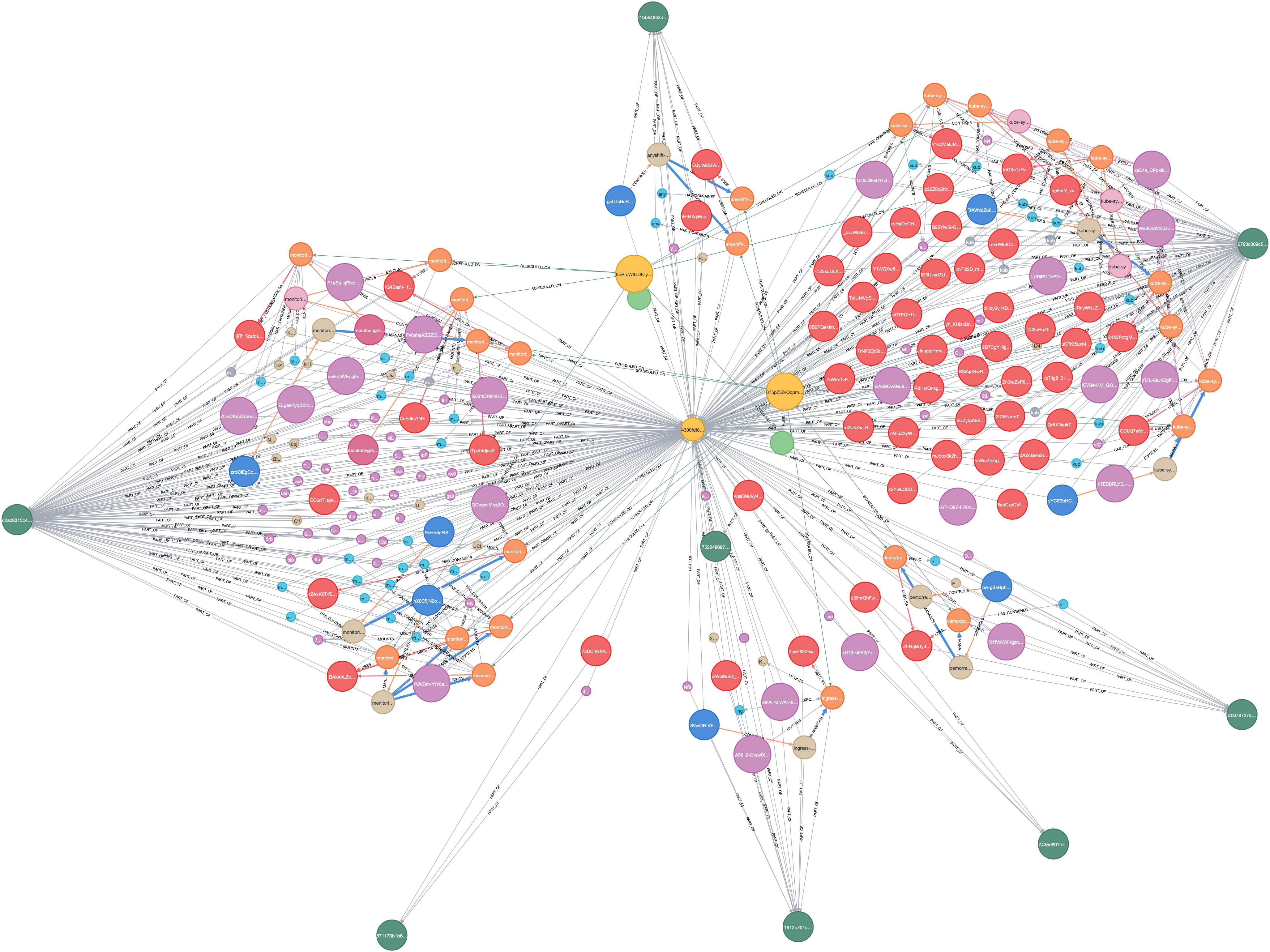
What Data Annie Has Access To
Annie automatically discovers relationships between these categories. Ask “Which code manages this instance?” or “What monitors are watching this service?”
How It All Connects
The knowledge graph links your infrastructure across four layers. Annie can trace relationships in any direction:Observability
Monitors, dashboards, alerts, and hosts
Cloud Infrastructure
Compute, storage, networking, security, and IAM
Containers & Workloads
Pods, services, deployments, and config maps
Infrastructure as Code
Modules, resources, variables, and state
How Fresh is the Data?
Near Real-Time
Infrastructure changes are reflected within seconds
7-Day History
Query the state of any resource at any point in the past week (extendable)
Change Tracking
See exactly what changed, when, and in what order
Live Observability Queries
For logs, metrics, and traces, Annie queries your monitoring tools live. She doesn’t duplicate your observability data. When investigating an incident, Annie calls your Datadog, Grafana, or other monitoring APIs in real-time, correlating what she finds with infrastructure changes from the knowledge graph.Benefits of Live Queries
Benefits of Live Queries
- Always fresh: No sync delays, you get the latest data
- No duplication: Your observability data stays where it is
- Full access: Annie uses your existing queries and dashboards
Related
Memory and Agents
How Annie learns from the graph and coordinates specialized agents.
Infrastructure as Code
Code → state → live, and how Annie draws it as a diagram.
Annie Knowledge
Query the graph in plain language.
Change Management
Walk the graph backwards through the last 7 days.